
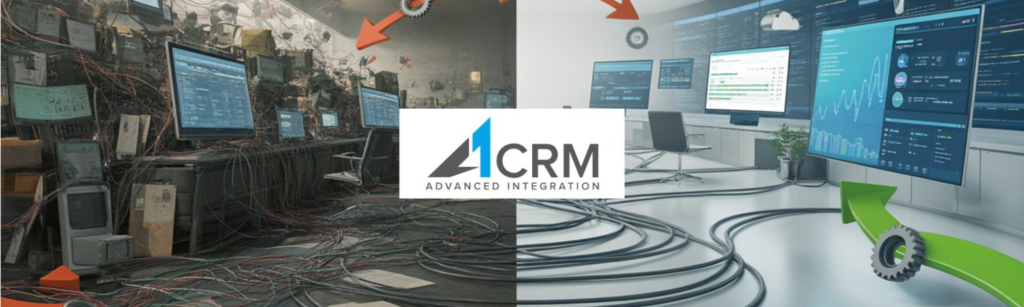
In today’s fast-paced business world, disconnected systems are more than just an inconvenience. They’re costing businesses time, money, and missed opportunities.
Many organisations in finance, healthcare, and manufacturing continue to rely on outdated, unintegrated systems that create bottlenecks, duplicate efforts, and frustrate employees.
But the good news? There’s a solution.
In this edition, we dive into the hidden costs of unintegrated systems and how adopting a unified CRM solution can drive efficiencies, reduce waste, and support growth.
The Hidden Costs of Disconnected Systems
Disconnected systems aren’t just inconvenient; they impact the bottom line.
Here’s how:
- Time Wasted on Manual Data Entry: Employees spend hours inputting the same data across multiple systems.
- Inefficiencies in Reporting: Without integrated systems, gathering data for analysis becomes a time-consuming and error-prone process.
- Missed Opportunities: Disjointed systems mean delayed follow-ups, inaccurate customer insights, and slower decision-making.
Businesses in regulated industries face unique challenges.
For example, in finance, manual tracking and reporting can lead to costly compliance errors. In healthcare, unintegrated systems often cause patient data inaccuracies, while manufacturers experience delays in production due to fragmented inventory systems.
Streamlining Operations with CRM Integration
So, how can businesses tackle the challenges posed by disconnected systems?
The answer lies in CRM integration.
Here’s how CRM systems can streamline operations:
- Centralised Data: Integrating all systems into a single CRM platform ensures data is entered once and accessed anywhere. This improves accuracy and accessibility.
- Automation: Automated workflows reduce repetitive manual tasks, freeing up time for employees to focus on high-value activities.
- Real-Time Insights: Integrated CRM systems provide businesses with real-time data, enabling quick decision-making and more personalised customer experiences.
Key Benefits of CRM Integration in Different Industries
- Finance: Improved compliance management, faster reporting, and personalised client experiences.
- Healthcare: Enhanced patient data accuracy, streamlined appointment scheduling, and improved patient follow-ups.
- Manufacturing: Better inventory tracking, optimised production schedules, and reduced wasted resources.
Integrating your CRM with the right tools helps ensure seamless communication, faster decision-making, and most importantly, cost savings.
Disconnected systems don’t have to be the norm. Streamline Your Business with CRM Integration.
If you’re ready to make your business more efficient, CRM integration is the way forward. By unifying your processes, you’ll improve productivity, reduce operational costs, and set your business up for scalable growth.
Are you ready to start the journey towards streamlined operations?
Book a free 1-hour discovery call today to explore how CRM solutions can transform your business.
Let’s get started.